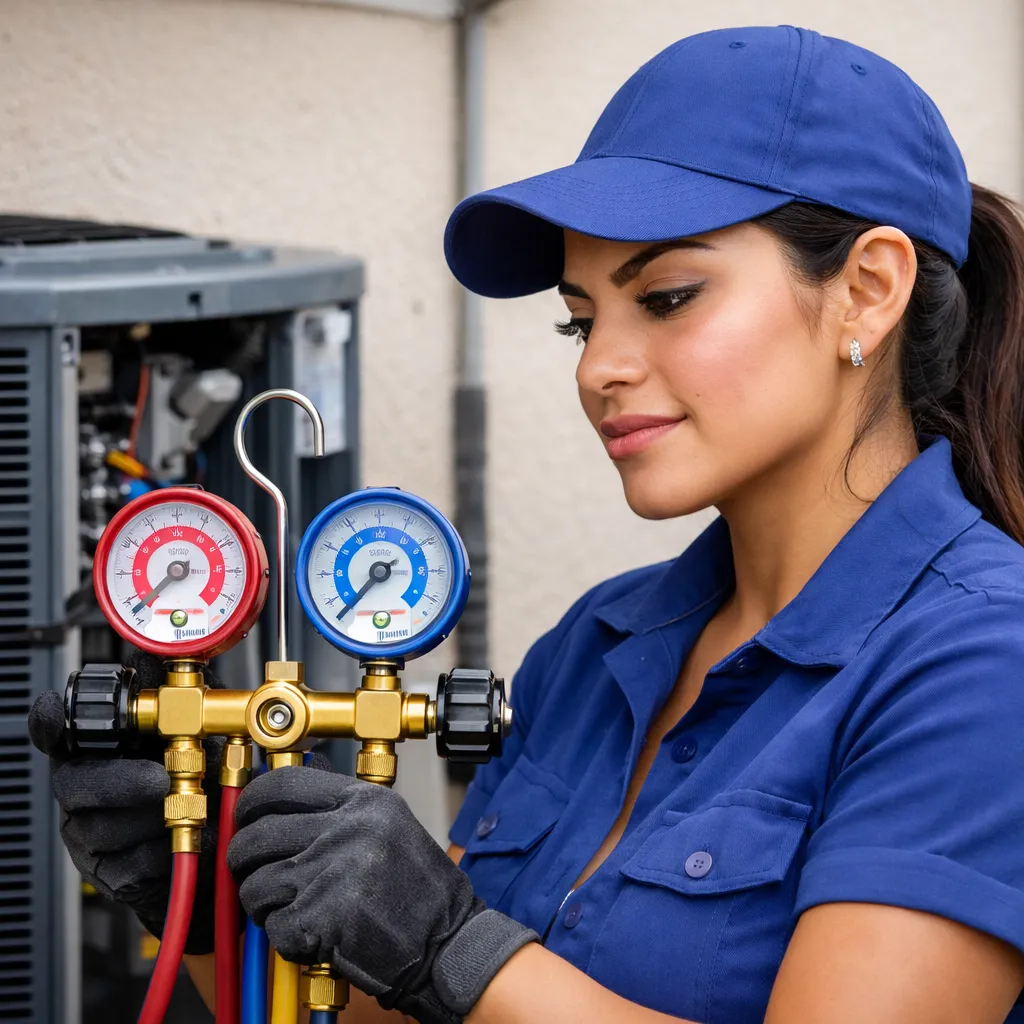
The Invisible Efficiency Killer: Why Oil Fouling Is Missed During Routine HVAC Diagnostics
The Invisible Efficiency Killer: Why Oil Fouling Is Missed During Routine HVAC Diagnostics
In HVAC, we’re trained to find what’s broken.
Dirty filters.
Low refrigerant.
Bad motors.
Failed compressors.
The obvious problems.
But there’s another issue happening inside almost every system that gets missed every day:
Oil fouling.
Not because technicians are careless—
because they were never trained to look for it.
What Oil Fouling Actually Is
Every refrigerant system circulates oil to lubricate the compressor.
Over time, a portion of that oil doesn’t stay suspended.
It starts to coat the inner walls of the evaporator and condenser coils.
That coating becomes a thermal barrier.
Oil does not transfer heat well.
So now the system has to push heat through an insulating layer.
The system still runs.
But it doesn’t perform like it should.
The Technical Reality
According to ASHRAE, oil fouling can reduce heat transfer efficiency by up to 30% over the life of the equipment.
This doesn’t happen overnight.
It builds slowly over years.
Which is exactly why it gets overlooked.
Why Routine Diagnostics Miss It
1. It’s Internal and Invisible
Standard maintenance focuses on what you can see:
Air filters
Outdoor coil condition
Electrical components
But oil fouling happens inside the refrigerant circuit.
You won’t see it unless you cut the system open.
2. Gauges Can Look “Normal”
Technicians rely on:
Pressure readings
Superheat
Subcooling
Here’s the problem:
A system with degraded heat transfer can still show readings that fall within acceptable ranges.
So, the conclusion becomes:
“Everything looks good.”
Meanwhile, performance is already compromised.
3. The System Still Runs
No lockout.
No failure.
No obvious defect.
Just longer run times and higher energy usage.
That usually gets blamed on:
System age
Weather conditions
Rising utility costs
Not internal efficiency loss.
4. Maintenance Doesn’t Address It
Routine service includes:
Cleaning coils (external)
Changing filters
Checking charge
Inspecting components
All important.
But none of this address internal oil distribution or heat transfer efficiency.
So the system passes inspection—
while still underperforming.
What This Looks Like in the Field
You don’t find oil fouling by looking for broken parts.
You find it by measuring performance.
Key indicators:
Low Delta T (temperature split)
Higher-than-expected amp draw
Elevated discharge line temperature
Longer runtimes to reach setpoint
Inconsistent system behavior under load
Individually, these may not raise alarms.
Together, they tell a clear story:
The system is running—but not transferring heat efficiently.
What It’s Costing
When oil fouling goes unaddressed:
Energy consumption increases
Comfort decreases
Equipment runs hotter
Components wear out faster
A system rated at 20 tons may only deliver the performance of 15–16 tons under peak conditions.
And nobody catches it—because nothing is technically “broken.”
The Industry Blind Spot
Most service calls lead to one of two outcomes:
Leave it alone
Recommend replacement
There’s rarely a third option presented.
So, performance loss gets labeled as:
“Old system—time to replace.”
That’s not always true.
A Different Approach: Performance Restoration
Not every problem requires replacing equipment.
Some systems don’t have failed parts—they’ve lost efficiency internally.
Addressing that means focusing on:
Heat transfer
System performance
Measurable results
When heat transfer is restored, you can verify it immediately in the field through:
Improved temperature split
Reduced amp draw
Stabilized system operation
No guessing.
Measured results.
Final Thought
If your diagnostic process is built to find what’s broken,
you’ll miss what’s inefficient.
And inefficiency is where a lot of opportunity lives.